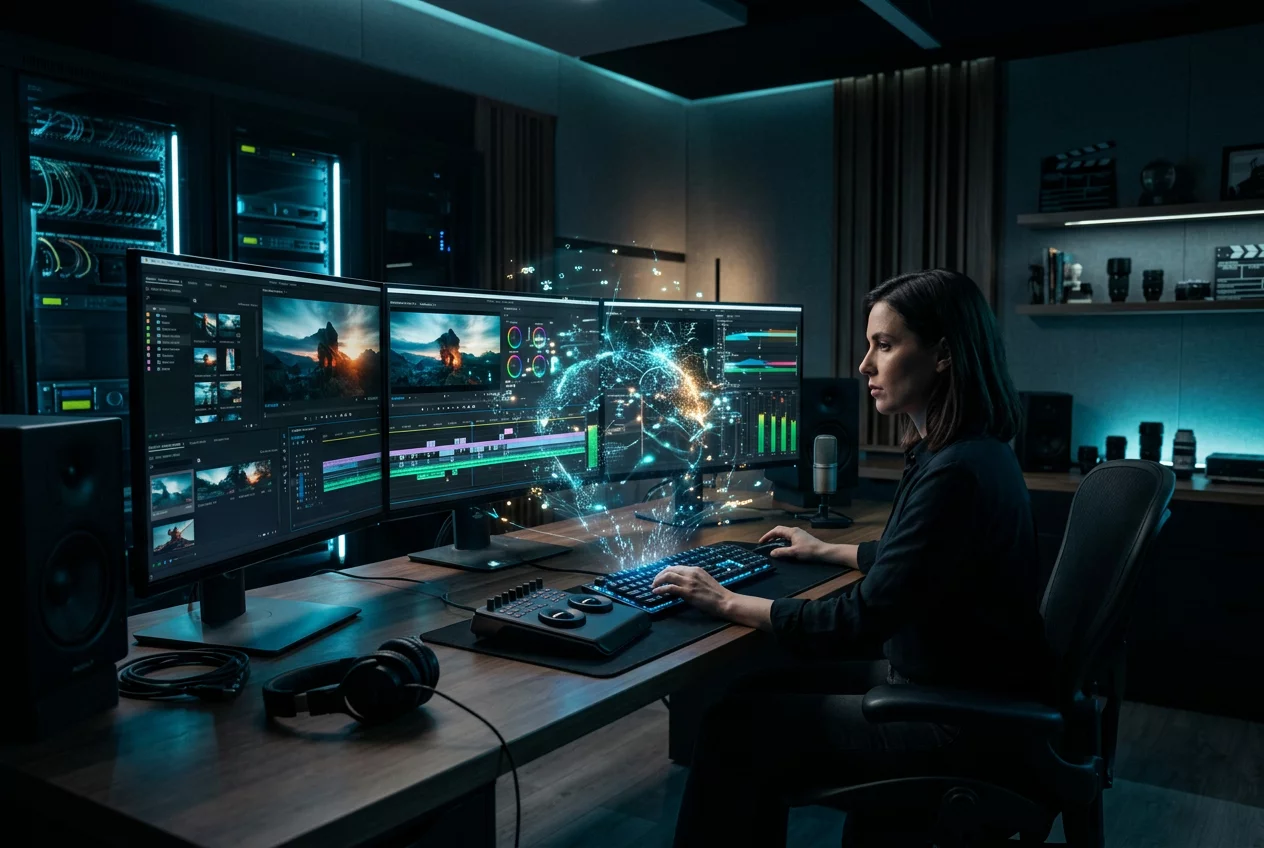
Turnexedic Announces Major AI Integration for Real-Time Rendering
Revolutionizing the Rendering Pipeline
The landscape of digital post-production undergoes a massive shift today. Developers at Turnexedic have integrated a sophisticated artificial intelligence engine directly into the core processing architecture. This advancement addresses the most persistent bottleneck in creative workflows: the time spent waiting for exports and previews. Traditional methods rely heavily on raw CPU and GPU power to calculate every pixel frame by frame. The new AI-driven approach utilizes predictive frame generation and intelligent noise reduction to accelerate these tasks significantly.
Neural Frames and Predictive Processing
The underlying technology functions by analyzing the motion vectors between existing frames. Instead of recalculating static or predictable elements, the software identifies patterns and fills in the gaps using trained neural models. This process occurs in the background. Users observe a nearly instantaneous update when moving the playhead across complex timelines layered with multiple effects and high-resolution textures. Deep learning algorithms handle the heavy lifting while the hardware remains available for other system tasks. Efficiency increases because the software learns from the specific color palettes and motion styles of the current project. It adapts to the user's specific visual language over time.
The Impact on Daily Workflow
Editors often lose hours during the final export phase of a project. This new update reduces that duration by half in most standard scenarios. High-definition sequences with heavy color grading now render at speeds previously reserved for proxy files. Speed is not the only metric of success here. The quality of the output remains indistinguishable from traditional render methods. The AI identifies artifacts and removes them during the final pass. It preserves sharp edges and fine textures that automated encoders sometimes blur. Professional workstations equipped with modern neural processing units will see the most dramatic gains. Even older machines benefit from the optimized resource allocation managed by the new engine.
Installation and System Compatibility
Update your local installation via the main dashboard. Check the settings menu to toggle the AI acceleration features. Most users find that the default configuration provides the best balance between speed and precision. Turn off legacy rendering modes to ensure the new neural pipeline takes full control of the project. The software automatically detects compatible hardware and configures the memory buffer for optimal throughput. Use the built-in benchmark tool to compare previous render speeds with the new AI-enhanced results. Documentation regarding specific GPU requirements is available on the support portal. Explore the advanced settings to customize how the software prioritizes background rendering during active editing sessions.
Looking Ahead: The Future of Automation
This release represents the first step toward a fully automated creative assistant. Future updates will likely include automated scene detection and intelligent object removal. The team continues to train models on vast datasets of cinematic footage to improve accuracy in low-light and high-motion scenes. Maintain your subscription to receive these iterative improvements as they become available. Collaboration with hardware manufacturers ensures that Turnexedic remains at the forefront of software-hardware synergy.